It was a peak summer weekend in the Punjab region when sun-boiled air molecules were difficult to inhale. After a whole day sitting in the AC, I came out for an evening stroll with family. That gap was for rest-time to the AC before the next night's batch. On the way, there was a sole tap water outlet with an underground pipe surrounded by the tree canopy of the avenue -Pterocarpus and Alstonia spp. It was a lucky thing, gaining blessings from commuters as well as players playing in the hot evening along the groundside.
Just 10 steps ahead, near the badminton court, a medium-height tree related to the lychee family was seen
with hanging fruits in clusters.
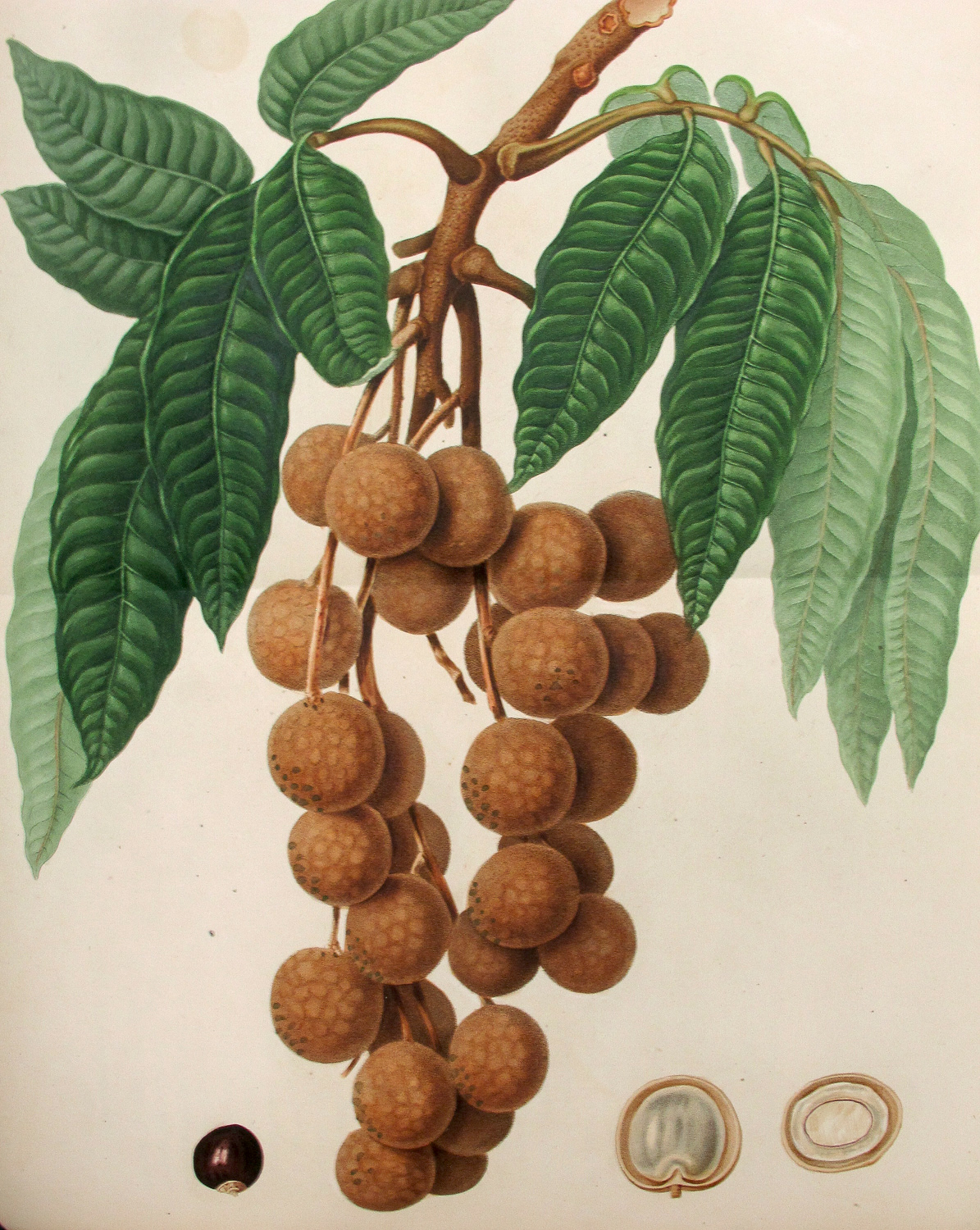
Longan-dragon eye

This Longan fruit tree, botanically known as Dimocarpus
longan is a subtropical evergreen tree of the Sapindaceae family native of South/South-East
Asia. This tree is cultivated for its timber and, especially, for its edible
fruit, which has a fragrance amalgamation of lychee and mango, and the sugar content of the fruit is quite high. Longan fruits are non-climacteric in type
and therefore have to be harvested when properly ripe. These will not ripen
during storage as lychee fruit does.
Dimocarpus longan

Its wood is considered
as tough as for making shuttle pipes, bearings, textile-weaving stands and
rifle butts, and sometimes for furniture and construction purposes. The seeds
contain the chemical saponin that can be used as a soap substitute.
A
complete review on ‘Extraction and pharmacological properties of bioactive
compounds from longan (Dimocarpus longan Lour.) fruit' published by
collaborative scientists around the globe – Yang, B., Jiang, Y., Shi, J., Chen,
F., & Ashraf, M. in year 2011.


No comments:
Post a Comment